
I spend a lot of time explaining financial goals to people who do not work in finance, because at large organizations, alignment is paramount.
If financial goals are not understood, strategy is not aligned.
Few concepts matter more than the balance sheet. To explain it, I use a simple 2×2 matrix built around two variables:
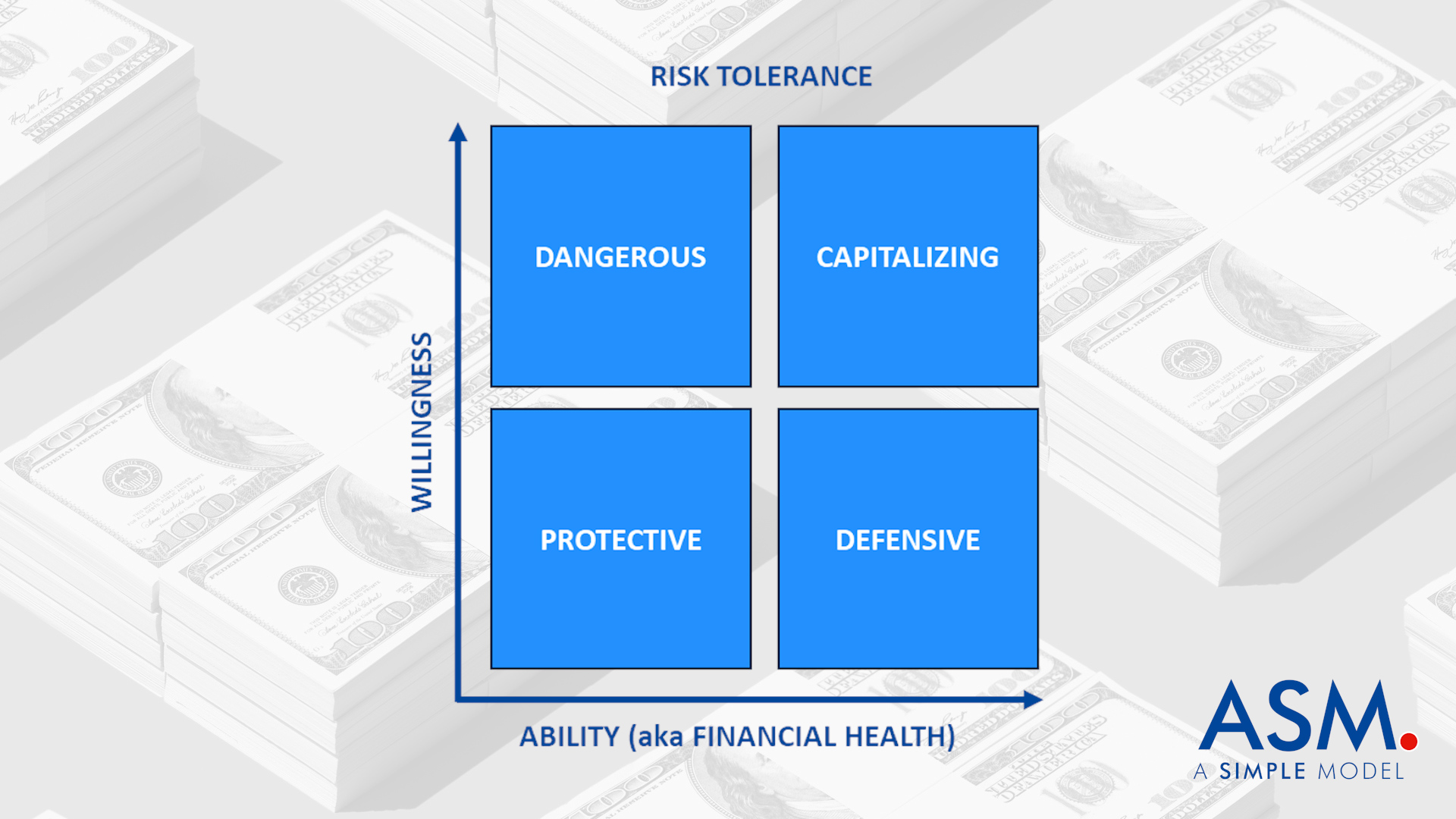
Ability: The financial capacity to take risk, defined by the company’s financial health.
Willingness: Cultural posture toward risk and the willingness to withstand loss.
When both are low, there is only one rational operating mode: Protective.
This is survival mode. I think of it as playing scared defense. You do not have the capacity to absorb loss.
One lawsuit. One recall. One downturn. And the company is in jeopardy.
Protective is not strategy. It is constraint.
If willingness is high but ability is low, the outcome becomes Dangerous.
You want to swing big. But the balance sheet cannot absorb a miss. One failed investment becomes an existential problem.
Risk tolerance without risk capacity is recklessness.
As ability grows, the menu expands.
Now you can choose to be Defensive: Operate conservatively even though you have strength. Navigate volatility calmly. Wait patiently.
Strength allows patience.
Or you can Capitalize: Identify attractive opportunities. Deploy capital when competitors pull back. Invest when valuations compress. Accelerate when others are repairing damage.
Eventually something goes wrong for everyone.
If your balance sheet can withstand it, that is the best time to play offense.
That is when your opportunity set goes from good to great.
Companies grow the fastest when their competitors cannot.
That is why a fortress balance sheet matters.