

Summary Text
As it relates to the private equity curriculum, you have by now likely noticed that attempts to describe how this industry operates frequently require a caveat-heavy preface. That is because most of the “rules” private equity follows are the byproduct of some negotiation that took place years prior, and there are no laws that require these precedents be followed. At risk of oversimplification, the actual rules are as follows: an asset is worth what someone will pay for it, and it will change hands when the parties involved agree to terms.
The lessons in this course contain due diligence lists with 300+ questions and Excel spreadsheets detailing third parties required to complete due diligence with total expense estimates north of $250,000 - $500,000. While this is common for many private equity firms, there are investors that choose to pursue investments more informally. Some examples are more exaggerated than others, and I specifically recall how early in my career I would compare the work I was doing to countless stories about Warren Buffett’s approach to acquiring businesses. When Buffett acquired the Nebraska Furniture Mart, for example, he reportedly walked into the store to negotiate the purchase price directly with the founder, Rose Blumkin. There was no audit and the total legal and accounting fees worked out to $1,400. When the transaction closed Buffett simply handed her a check. Mrs. B, as she became affectionately known, folded the check, placed it in her pocket, and responded: “Mr. Buffett, we’re going to put our competitors through a meat grinder.” (Failure to negotiate a non-compete made for a funny story.)
The cool confidence required to close transactions Buffett-style, however, requires knowledge of anything that could ail a business. Also, outside of legendary stories about legendary investors, I have never encountered or even heard of such a process. In today’s market, if a transaction closed without proper due diligence, and the business failed to perform, it would likely expose the sponsor to lawsuits from furious investors. As such this course will focus on a more thorough due diligence process and this lesson on a more formal approach to securing exclusivity.
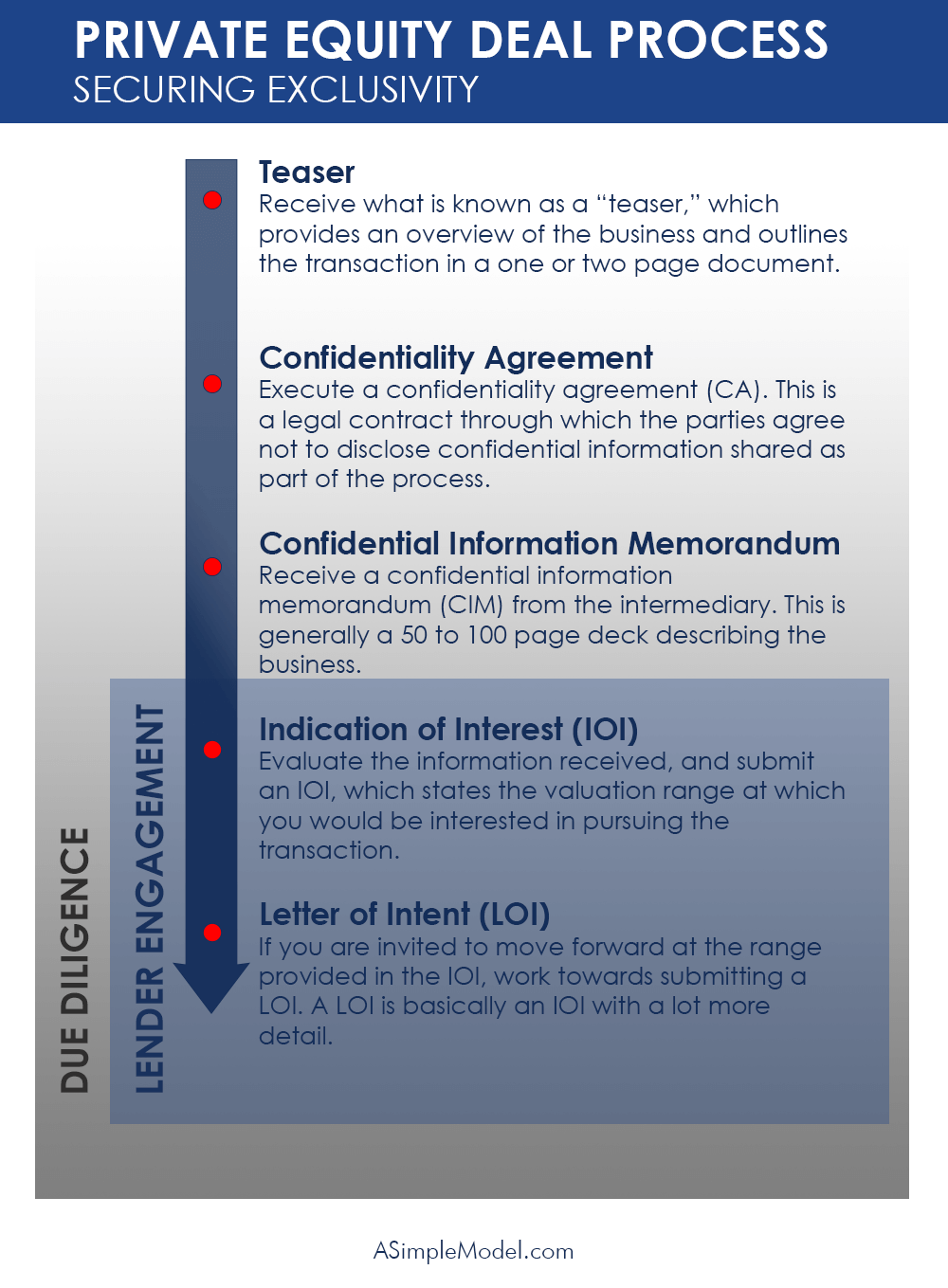
Between a proprietary investment process, where the negotiations take place directly with the seller, and a “banked” auction process where the seller is represented by an intermediary, it is likely that most private equity practitioners will be exposed to a banked process before identifying a proprietary opportunity. So, this lesson will focus on a standard auction process led by an investment bank, which is known as a “sell-side engagement.” Fortunately, this process requires an exchange of documents that almost always follows the same sequence. Below you will find an image detailing these documents, followed by an overview of this process. In the lessons that follow we will dive deeper into the details of each step.